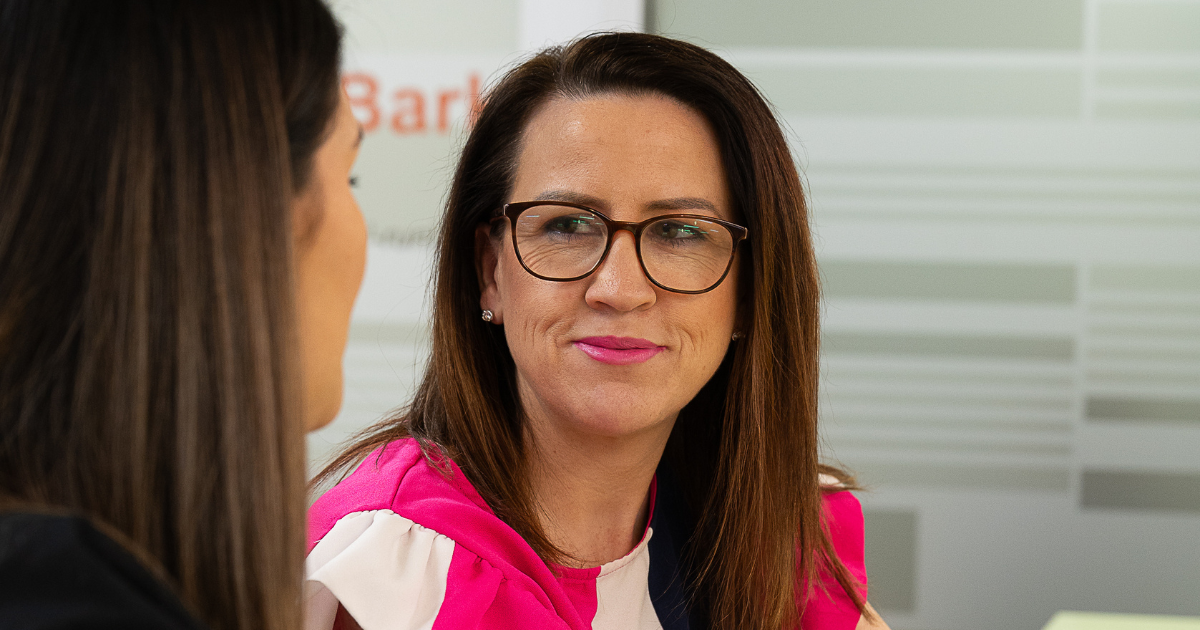
I’m the Team Leader for the Core and Cluster program, delivered at Ngarrunga, in the Hawksbury area – the first refuge of its kind in this area. There has historically been a real need for these services in this region, and many motivated people have been trying for over 30 years to establish a refuge such as this.
Link Wentworth is now a White Ribbon accredited organisation. White Ribbon accreditation involves setting-up and realisation of deliverables, which we commit to as an organisation. There have been many of us involved in the accreditation process. When I first jumped in as Chair, I took over from the really great work that my predecessor Ellen had already started, and my role was to continue that journey and steer the team. Amelia Williams, our secretary, has played a huge role, as have all the committee members.
Accreditation means that we are skilled and resourced with appropriate policies and procedures to support people within our organisation who experience domestic violence. It means that people who work here know there are supports available to them, that those supports are part of our working culture and they can expect to be safeguarded. It also safeguards Link Wentworth, as an organisation, around how we support our people. One of the requirements for accreditation is that all line managers have to be trained, to be able to support their staff, should they disclose.
This means we now have an army of people who are skilled to be able to do what’s appropriate for an individual, should there be a disclosure – either regarding their own situation, or that of a colleague. A response would always be on a case-by-case basis, taking into consideration what the person wants, first and foremost. It’s the same framework we work with, here at Ngarrunga. There is a spectrum of support options in place. There is domestic violence leave, there are safety plans, in the workplace and at home. It could just be accessing information about options. It comes down to how the person wants to respond to their situation, and if they want to respond. They may just want to give you a safe word, that says, ‘When I say this word, I’m no longer safe. This is what I need you to do.’
It’s not as black and white as we would hope it would be, because it’s not a black and white issue. It’s ever-evolving.
I started this role in July of this year. Collectively, I have worked with Link Wentworth for seven and a half years, in the operational tenancy space for majority of that time. I have also been a case worker in the specialist support team, working with women and children, in situations where there was domestic and family violence, and have been an advocate in this space.
I’m also a survivor.
While currently, we talk about action in terms of ending men’s violence against women – because that is what the statistics reflect as being the reality – there is also the acknowledgement that it’s not always the case. Violence can be man against man, woman against woman, woman against man, or children. As well as this, someone who may be born as a man but now identifies as a woman, also is part of what needs to be considered. We incorporate these considerations at Ngarrunga; while our service provision is for women, specifically it is for people who identify as women, which is subject to a range of considerations, to keep our women safe.
To support White Ribbon Day, we need people to stand up every day, in everyday life. We want men to be listening, acknowledging and taking the learnings – they don’t have to be standing there and chanting. Positive action can be just in a in a very personal space, where they’re considering their conversations with women. Considering how they raise their sons. Considering the relationships they have and their influence – whether as coaches or mentors or team player – and how those conversations treat and respect women in a healthy way.