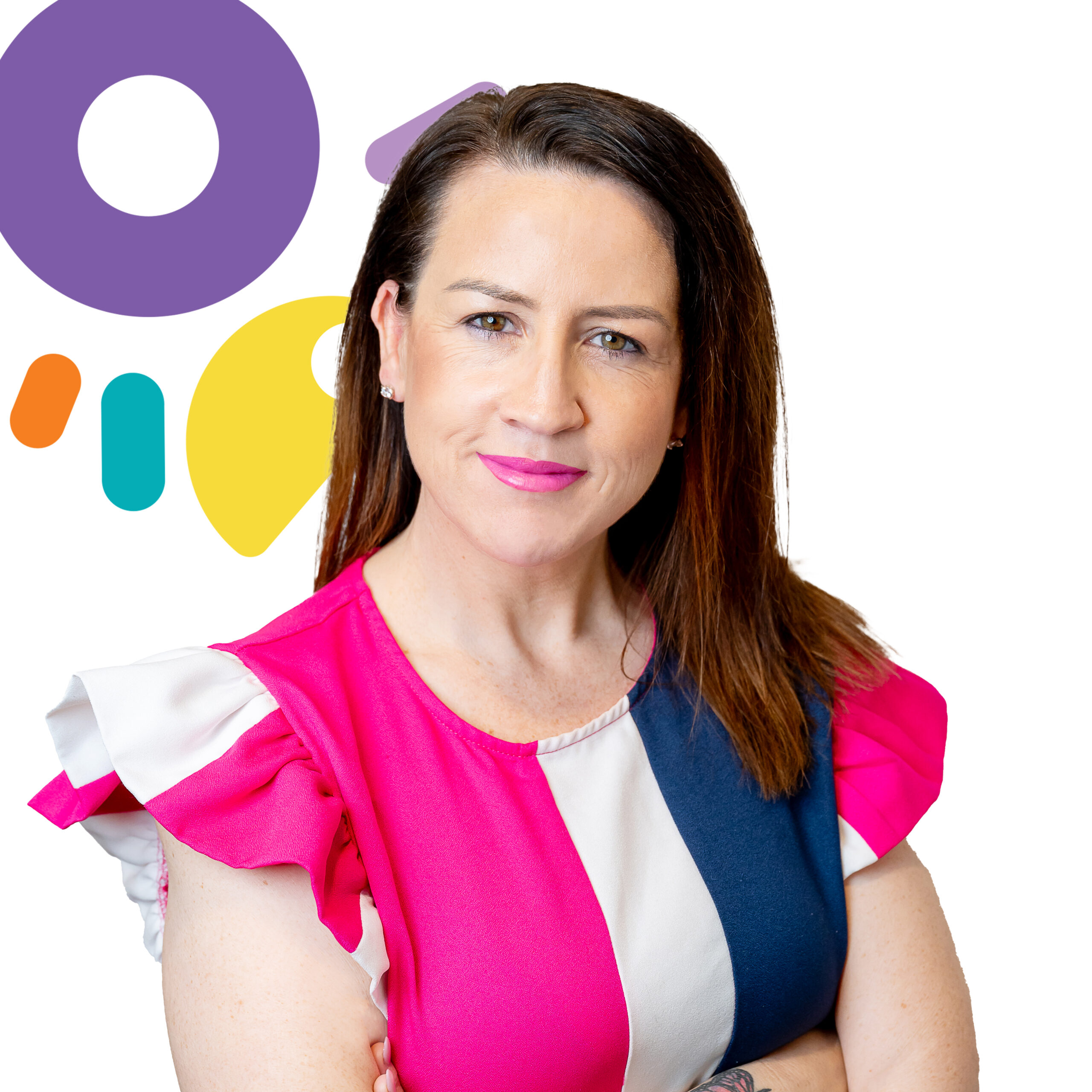
I’m the Team Leader for the Core and Cluster program, delivered at Ngarrunga, in the Hawksbury area – the first refuge of its kind in this area. There has historically been a real need for these services in this region, and many motivated people have been trying for over 30 years to establish a refuge such as this.
While there have previously been Community Housing providers and government agencies in the region, there has not historically been a core organisation working in partnership with service providers to establish this new kind of model. It is not just about providing the service itself, there is also the planning and development behind the building, its maintenance, administration and upkeep. We partner with the knowledge, history and skills brought the Women’s Cottage, to provide a new service model, which we call ‘Core and Cluster’.
I started this role in July of this year. Collectively, I have worked with Link Wentworth for seven and a half years, in the operational tenancy space for majority of that time. I have also been a case worker in the specialist support team, working with women and children, in situations where there was domestic and family violence, and have been an advocate in this space. I am also the Chair for the Link Wentworth White Ribbon Committee. I feel as though all these opportunities gave me the skill set to be able to support and guide to my team, in delivering this service.
I’m also a survivor.
One of the key goals with the Core and Cluster model was to incorporate more people with lived experience. This can make a huge difference in building those relationships with women who come to our services, because it can be a silent thing, an unspoken relationship. You generally know, without saying the words, when you’re speaking with a woman who understands what you’re going through, what you’ve been through. It can be a relief to not have to describe it in words.
There has been huge demand for the service. At one point, we had twelve women and eleven children applying for one vacancy.
Ngarrunga works on a new model and framework – the Core and Cluster model, in which Link Wentworth is the ‘core’ supported by ‘cluster’ support services. I describe the ‘core’ as being the accommodation which we provide – the safe place to rest the head. We are supported by the Women’s Cottage and other service providers in the Hawkesbury community – the ‘cluster’. They support my team, in upskilling our service delivery and supporting some decision-making, and acting as a sounding board.
There are many points of difference that make this model special; one is, that we are able to accommodate pets. One of the reasons that women don’t leave a violent home situation is because they’ve got nowhere for their pets to go, or they have to leave them behind. Pets can play a key part in recovery, supporting mental health and getting women through those moments of doubt.
Another distinctive aspect to our service model is regarding male children. Historically, once they were of a certain age, sons were not able to go into a refuge with their mother. They would have to go to a separate refuge, because they weren’t allowed in those spaces. At Ngarrunga, the women are able to have their sons come with them.
Since Ngarrunga has been operational, opening on 27 May 2023, we have assisted 28 women and children – Nine women and 19 children aged 0-14, and three pets. We’ve had some successful outcomes so far – we’ve had a woman going to the Start Safely program; we’ve had another woman go into one of our Link Wise properties. Another has gone into an aged-care retirement facility.
The involvement of the NSW Police has been instrumental in supporting the design of our services. The Crime Prevention officer and the DVLO (Domestic Violence Liaison Officer) have been part of the planning – from how the property was going to look, safety planning, helping us to access information that we might need, or that our clients might need. They have been part of the Operations Committee and the Leads Committee; they have made themselves available to myself, my team and the women. They have really put their heart and soul into this space as well.
Link Wentworth is now a White Ribbon accredited organisation. White Ribbon accreditation involves setting-up and realisation of deliverables, which we commit to as an organisation. There have been many of us involved in the accreditation process. When I first jumped in as Chair, I took over from the really great work that my predecessor Ellen had already started, and my role was to continue that journey and steer the team. Amelia Williams, our secretary, has played a huge role, as have all the committee members.
When I started many years ago, White Ribbon accreditation was something that our CEO Andrew McAnulty was very passionate about, and the organisation already had taken major steps in that direction. It is really good to see our CEO championing this, as a man who is in a powerful, public position, utilising it to bring attention to this worldwide problem. We need men to take this up, to stand up for it. You don’t have to be a CEO to make a difference.
Accreditation means that we are skilled and resourced with appropriate policies and procedures to support people within our organisation who experience domestic violence. It means that people who work here know there are supports available to them, that those supports are part of our working culture and they can expect to be safeguarded. It also safeguards Link Wentworth, as an organisation, around how we support our people. One of the requirements for accreditation is that all line managers have to be trained, to be able to support their staff, should they disclose.
This means we now have an army of people who are skilled to be able to do what’s appropriate for an individual, should there be a disclosure – either regarding their own situation, or that of a colleague. A response would always be on a case-by-case basis, taking into consideration what the person wants, first and foremost. It’s the same framework we work with, here at Ngarrunga. There is a spectrum of support options in place. There is domestic violence leave, there are safety plans, in the workplace and at home. It could just be accessing information about options. It comes down to how the person wants to respond to their situation, and if they want to respond. They may just want to give you a safe word, that says, ‘When I say this word, I’m no longer safe. This is what I need you to do.’
It’s not as black and white as we would hope it would be, because it’s not a black and white issue. It’s ever-evolving.
While currently, we talk about action in terms of ending men’s violence against women – because that is what the statistics reflect as being the reality – there is also the acknowledgement that it’s not always the case. Violence can be man against man, woman against woman, woman against man, or children. As well as this, someone who may be born as a man but now identifies as a woman, also is part of what needs to be considered. We incorporate these considerations at Ngarrunga; while our service provision is for women, specifically it is for people who identify as women, which is subject to a range of considerations, to keep our women safe.
To support White Ribbon Day, we need people to stand up every day, in everyday life. We want men to be listening, acknowledging and taking the learnings – they don’t have to be standing there and chanting. Positive action can be just in a in a very personal space, where they’re considering their conversations with women. Considering how they raise their sons. Considering the relationships they have and their influence – whether as coaches or mentors or team player -, and how those conversations treat and respect women in a healthy way.
One of the things we did with the Women’s Cottage, on the 26th of October, was Reclaim the Night. Each year, during that event, we take a moment to say the names of all the women who have lost their lives to domestic and family violence in Australia that year, up until that date. On that night, when we initially worked out the number, there were 42 women.
That same day, another woman was killed. It became 43.
And on that list was a baby, who lost their life at the hands of domestic violence.
So, we take that moment, and we say each of their names, and we put a candle down and then we stand there for a minute of silence, and we respect those women.
Next year, if men in our communities want to do anything, they could come and stand with us as we say their names. That’s probably what I’d ask for.